Here are two things that you might recognize:
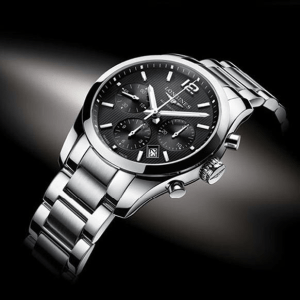
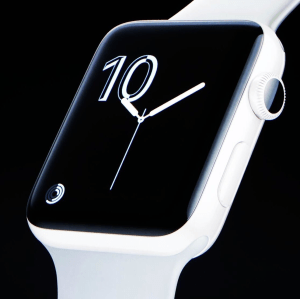
Their features overlap a bit, but they are not really alike. Yes, you strap both of them to your wrist and they both tell time and date. That’s where the similarities end. Incidentally, that’s also the full description of the functionality of one of those devices.
Ben Brooks wrote an article about one of those devices. The Apple Watch to be precise. I encourage everyone to read it, he’s a good writer and it’s a good article. While you are at it, give him a subscription as well.
In his article he listed pros and cons of the device. I will not talk about the lack of “statement” (which is subjective) or lack of “smarts” (which it has way more than normal watches do). I will talk about about battery-life. Ben mentioned that the battery-life is terrible (“18 hours, at most”), especially when compared to traditional watches. There are two points to tackle in that: the battery-life of the device as is, and battery-life when compared to traditional watches.
True, Apple makes certain promises when it comes to the battery-life, which Ben quotes in his article as a negative. But the thing is that they underpromise. I wear my watch (Series 3, 42mm, no LTE) 16 hours a day, and have about 75% left at the end of the day. That’s without any workouts. With workouts it’s maybe about 60%. My wife has 38mm Series 1, and she has about 50% left at the end of the day, without workouts.
Whether Apple should underpromise when it comes to battery-life is a different discussion. But it’s pretty safe to say that the battery lasts longer than 18 hours in typical use.
Then we have the other point: battery-life when compared to traditional watches is terrible. Sure, maybe. On traditional watches the battery-life can be measured in years. Some have no battery at all, using the kinetic energy of your moving arm. That good and all. But does it matter? Watches are not smartwatches. They do fraction of what smartwatches do. They tell the time and date, and that’s about it. And mechanical watches are not even very accurate timepieces. Smartwatches do all that traditional watches do, plus they monitor your vitals, have your calendar, emails, messages, phone. They hail your ride, pay your groceries, track your water-intake, your calories, your exercise.
Saying that Apple Watch has terrible battery-life when compared to traditional watch is like saying that traditional watches have terrible battery-life when compared to sundials (sundials don’t have battery, but you get the point). It’s true, but it’s not really relevant nor is it a valid comparison.
At this point some might be saying “why isn’t it a valid comparison? After all, Apple compares themselves to traditional watch-makers”. True. But the thing is that smartwatches are watches. That is, they go to your wrist and tell time. If you want a watch, smartwatch is a viable choice. But traditional watches are not smartwatches. If you want a smartwatch, traditional watch from Omega or Rolex (for example) are not an alternative. The result of this one-sided competition is that in just couple of years, Apple went from nothing to biggest watch-maker in the world.
Yes, their batteries don’t last as long. Such is life. Smartphones also have batteries that don’t last as long when compared to dumb-phones, but we don’t complain about that, because those devices are not really alternative to each other. Before I got my iPhone, I used a Nokia phone that had a battery that lasted close to a week. One reason for that was that I also used it way less. I used it to make calls and send SMS, neither of which I do that often. In comparison I use my iPhone for everything including typing these very words.
The thing is not that how much battery-life the device has when compared to some other device that has some tiny subset of functionality. The question is that does it have enough battery-life. Apple Watch certainly does. It lasts comfortably all through the day. And if you want to wear it all the time (to track sleeping for example), that can be achieved by charging the watch while you shower and brush your teeth. If you want to go gung-ho on it, put it on airplane-mode while you sleep.
When we moved from dumb-phones to smartphones, the battery-life was one complaint. People were used to phones lasting for several days on a charge, and the idea of daily charging seemed ludicrous. Today, we don’t really mind, as we realized we can do so much more with smartphones and daily charging is a non-issue. Yes, we do want even more battery life, as many of us have to charge our phones in the middle of the day as well, as the amount of stuff we do on our phones is insane. But we don’t pine for the time when we had dumb-phones that lasted days, we have moved on to better things. Maybe sometime in the future we have moved on from glorified pieces of jewelry to small wrist-worn computers. We already moved from phones to pocketable computers. And looking at who is the biggest watchmaker today, I’d say that transition is well on its way.

 Lumisade